
Posted on April 3, 2026 by
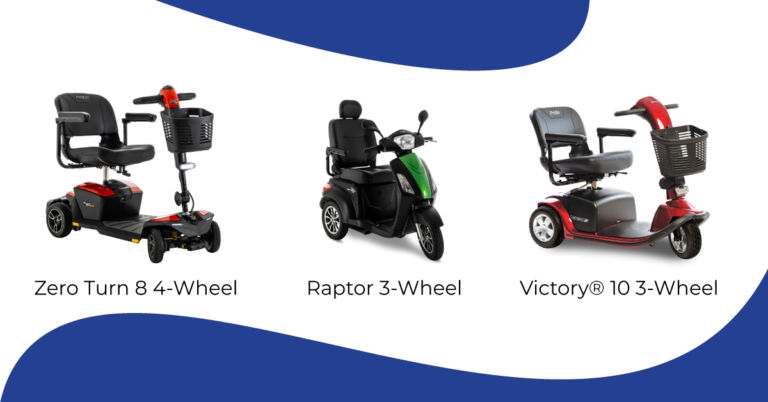
Losing the ability to get around easily doesn't mean losing independence. For many older adults and people with disabilities, a mobility scooter is what makes the difference between staying home and getting back out into the world.
But with so many models available, knowing where to start is its own challenge. This guide covers what to look for in a mobility scooter, how to compare your options, and how to figure out what Medicare or insurance might cover.
Who Benefits from a Mobility Scooter
Mobility scooters work best for people who can sit upright independently and walk short distances on their own but have difficulty managing longer distances, uneven terrain, or extended time on their feet.
Common situations where a scooter helps:
- Arthritis, chronic joint pain, or fatigue that limits walking distance
- Recovery from surgery or injury
- Conditions like MS, COPD, or Parkinson's disease that affect stamina or balance
- Anyone who wants to stay active and independent without overexerting themselves
If someone cannot stand or walk at all without support, a power wheelchair may be the more appropriate option. The APA Medical team can help you assess which direction makes sense.
How to Choose the Right Mobility Scooter
Getting this decision right comes down to five practical factors.
1. Where will you use it most?
Indoor use requires a tighter turning radius and a more compact frame to navigate hallways and doorways. Outdoor use calls for a sturdier build, better ground clearance, and longer battery range. Many people need both — in which case a mid-size 4-wheel scooter is often the best fit.
2. How far do you need to travel on a single charge?
Most scooters range from 10 to 20 miles per charge. If you're using the scooter primarily around the house, a shorter range is fine. If you're planning grocery runs, outdoor errands, or community outings, prioritize range.
3. Do you need to transport it in a vehicle?
If the scooter needs to go in a car, weight and disassembly matter. Some models break down into 3–5 manageable pieces without tools. Others are too heavy to lift without a vehicle lift or ramp. Know this before you choose.
4. What is the user's weight capacity?
Standard scooters support 250–300 lbs. Bariatric models support 400 lbs. or more. Always check the manufacturer spec — not the estimate.
5. 3-wheel or 4-wheel?
3-wheel scooters offer a tighter turning radius, which helps indoors and in smaller spaces. 4-wheel scooters are more stable on outdoor terrain and at higher speeds. If stability is a concern, 4-wheel is the safer choice.
APA Medical's Top Mobility Scooter Models
APA Medical carries a full line of Pride Mobility scooters. Here are three of the most popular models.
Pride Victory 10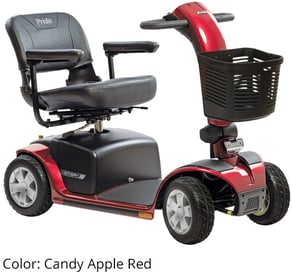
Best for: Everyday use, indoor and outdoor
- Available in 3-wheel and 4-wheel versions
- Up to 16-mile range per charge
- 400 lb. weight capacity
- Disassembles with one hand — no tools needed
- LED headlight included
The Victory 10 is one of the most versatile scooters available. It handles the grocery store, the neighborhood, and home use without asking you to compromise.
Pride ZT10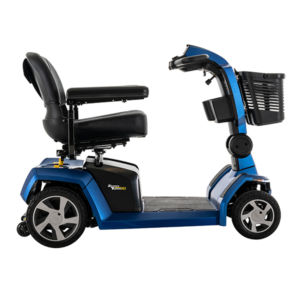
Best for: Outdoor use and tighter indoor spaces
- 4-wheel stability with 3-wheel maneuverability via iTurn Technology
- Dual motors and two-wheel drive
- Three-speed control for transitioning between indoor and outdoor use
- Built for people who want the stability of a 4-wheel without sacrificing maneuverability
The ZT10 is for people who want to cover more ground — and still be able to navigate their home when they get back.
LiteRider Envy Power Chair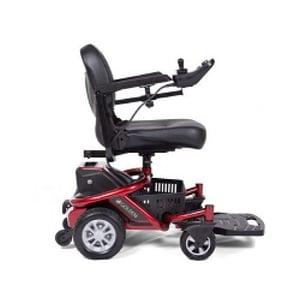
Best for: Travel and portability
- Lightest in its class — heaviest single piece is 35 lbs.
- Disassembles quickly for transport
- Full-day battery for comfortable all-day use
If getting the scooter in and out of a vehicle is a primary concern, the LiteRider Envy is built specifically for that.
Indoor vs. Outdoor Use: What Changes
Most people assume they need an outdoor scooter, but the majority of scooter use actually happens indoors and in parking lots. Here's what to consider for each setting.
Indoor use: Prioritize turning radius, width, and quiet operation. Standard doorways are 32–36 inches wide. A scooter with a turning radius under 50 inches will navigate most homes without difficulty.
Outdoor use: Prioritize ground clearance, battery range, and speed. Uneven sidewalks, curb cuts, and grass all require more stability and power. A 4-wheel scooter with at least 3 inches of ground clearance handles most outdoor terrain.
Both: The mid-size 4-wheel models — like the Victory 10 — are designed to do both reasonably well. If you need to choose between the two, think about where the scooter will spend the majority of its time.
When a scooter isn't the right fit: Scooters require the user to sit upright, operate hand controls, and have enough core stability to avoid tipping on uneven ground. If those conditions aren't met, an electric wheelchair with full postural support is a safer option. The APA team can walk you through the differences.
Does Medicare Cover Mobility Scooters?
Medicare Part B may cover a mobility scooter if it is deemed medically necessary for use inside the home. Specifically, Medicare typically requires:
- A physician's determination that the scooter is medically necessary
- A diagnosis or condition that limits your ability to walk safely inside your home
- A Letter of Medical Necessity (LMN) from your doctor
- Purchase through a Medicare-enrolled DME supplier
Medicare generally does not cover scooters intended primarily for outdoor or recreational use. Private insurance plans vary — some offer additional coverage beyond Medicare.
APA Medical is a Medicare-enrolled DME supplier. Our team handles the paperwork, verifies your benefits before anything moves forward, and will let you know exactly what to expect before you commit.
Frequently Asked Questions
Does Medicare cover mobility scooters?
Medicare Part B may cover a scooter if your doctor determines it is medically necessary for indoor use and you meet the eligibility criteria. APA Medical can verify your coverage before you make any decisions.
What is the difference between a 3-wheel and 4-wheel mobility scooter?
3-wheel scooters have a tighter turning radius and work better in smaller indoor spaces. 4-wheel scooters are more stable on outdoor terrain and at higher speeds. If stability is a priority, go with 4-wheel.
What is the lightest mobility scooter for travel?
The LiteRider Envy is one of the lightest options available — the heaviest single piece weighs 35 lbs., making it manageable for most people to load into a vehicle.
How far can a mobility scooter travel on one charge?
Most models range from 10 to 20 miles per charge. The Victory 10 goes up to 16 miles. Range depends on terrain, user weight, and speed.
Can you take a mobility scooter on public transit?
Most public transit systems in the U.S. accommodate mobility scooters under ADA guidelines. Check with your specific transit provider; dimensions and weight limits vary by system.
Scooter vs. power wheelchair — how do I know which one I need?
If you can sit upright and walk short distances independently, a scooter is likely the right fit. If you need power wheelchairfull postural support or cannot operate hand controls safely, a power wheelchair may be more appropriate. The APA team can help you assess this.
Talk to APA Medical Before You Decide
APA Medical has been helping people in Minneapolis and the Twin Cities find the right mobility equipment for over 50 years. We carry a full line of Pride Mobility scooters and have a showroom where you can try them before you buy.
We also handle Medicare and insurance verification so you know what's covered before you make any decisions.
Call us at 612-722-9000 or visit our Minneapolis showroom to get started.