
Posted on September 22, 2025 by
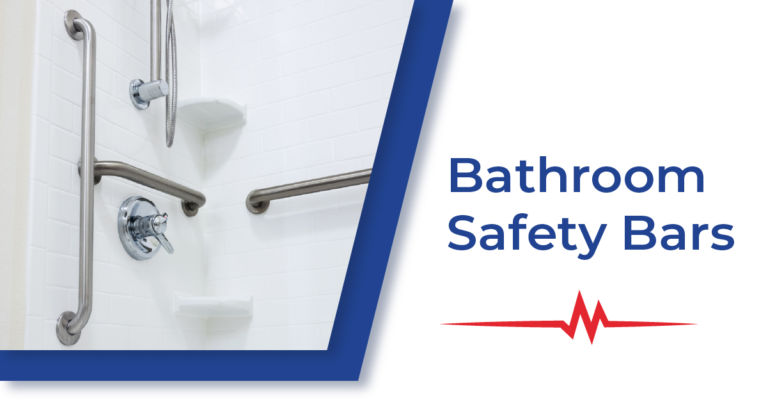
More than three million older Americans are treated in emergency rooms every year for fall-related injuries — and 80 percent of those falls happen in the bathroom. Wet floors, hard fixtures, and the physical demands of getting in and out of a tub or off a toilet make it one of the most hazardous rooms in any home.
Bathroom safety bars — also called grab bars — are one of the most effective and affordable ways to change that. But not all grab bars are the same, and the wrong choice installed in the wrong place won't do much good.
This guide covers the main types of safety bars, how to choose between them, and what to look for before you buy. For specific placement measurements by location, see our guide to where to install grab bars.
Types of Bathroom Safety Bars
Straight Grab Bars
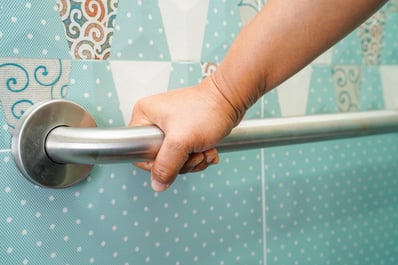
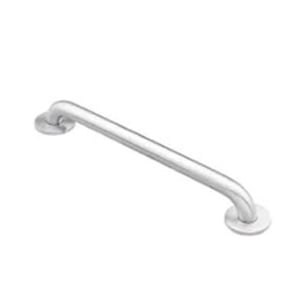
The most common and most versatile option. Straight bars come in lengths from 12 to 42 inches and can be installed horizontally, vertically, or at an angle depending on the application. When properly mounted into wall studs, they support up to 500 lbs.
Best for: Showers, tubs, and toilet areas where a fixed, permanent bar is the goal.
APA Medical carries stainless steel straight grab bars that meet ADA specifications and install securely into any stud at any angle. White finish options are also available for bathrooms where aesthetics matter.
Angled Grab Bars
 These bars are installed at a diagonal and are particularly useful for tub entries and shower entrances, where the movement is more of a diagonal transfer than a straight pull. The angle provides a more natural grip during the transition from standing to seated — or vice versa.
Best for: Bathtub entry and exit, walk-in shower entrances.
Toilet Safety Frame
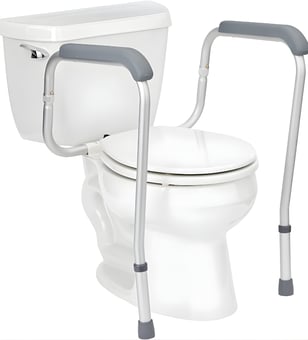 A freestanding frame that clamps securely to most standard toilets without wall mounting. Contoured armrests provide a gripping surface on both sides, making it easier to lower and push up from a seated position. The aluminum frame is lightweight, adjustable in width, and assembles without tools.
Best for: Anyone who needs toilet support but lives in a rental, doesn't want wall installation, or needs a solution that can be moved between bathrooms.
Also worth noting: APA carries the SuperBar, a tension-mounted floor-to-ceiling pole that works well beside a toilet, near a bed, or anywhere in the home where a stable grip point is needed without drilling into walls.
Suction Cup Grab Bars
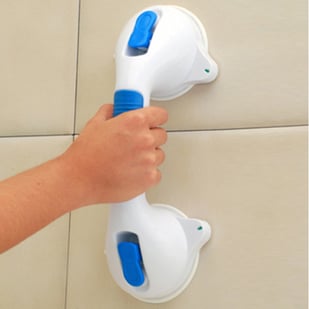 Suction cup bars install instantly without tools and leave no holes in tile or walls. They are useful for balance support in low-risk situations but have a critical limitation: they are not designed to bear full body weight and should never be used as a fall recovery device.
Best for: Light balance assistance only — not as a primary safety bar for anyone at real fall risk.
A note on suction cup safety: always check the indicator before each use to confirm the seal is secure. If the indicator is not green, do not use the bar until it is re-seated. These bars require flat, non-porous surfaces to work at all — textured tile or fiberglass walls will not hold a proper seal.
If you or a family member has meaningful fall risk, a permanently installed bar is the right choice. Suction cup bars are a supplement, not a substitute.
Floor-to-Ceiling Safety Poles
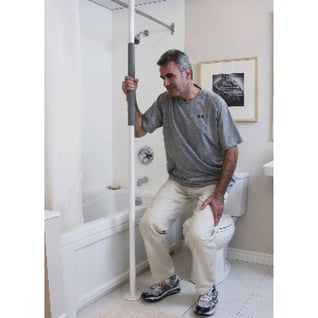 These poles use jackscrews to tension between the floor and ceiling — no drilling, no studs required. They work well in open bathroom spaces where wall mounting isn't practical and provide both vertical and horizontal grip points.
APA Medical carries the SuperPole, which can be configured with an optional horizontal SuperBar attachment. The SuperBar locks into eight positions around the pole (one every 45 degrees), giving users a stable grip point from multiple angles — useful for toilet transfers and tub entry.
Best for: Renters, open bathroom layouts, or situations where wall installation isn't an option.
Important limitation: Floor-to-ceiling poles require flat, level floors and ceilings to maintain proper tension. They are not appropriate for use on uneven surfaces.
Permanent vs. Suction Cup: Which Is Right for You
| Permanent (Wall-Mounted) | Suction Cup | |
|---|---|---|
| Weight capacity | Up to 500 lbs. | Not rated for full weight bearing |
| Installation | Requires studs or anchors | No tools needed |
| Surfaces | Most wall types | Flat, non-porous only |
| Best use | Primary fall prevention | Light balance assistance |
| Rental-friendly | No | Yes |
The recommendation for anyone with moderate to high fall risk is a permanent wall-mounted bar. The installation is straightforward, and the security difference is significant. Suction cup bars are fine as a temporary measure or for low-risk users, but they should not be the only safety measure in place.
ADA Compliance
APA Medical's permanently installed grab bars exceed ADA requirements:
- 1-1/4 inch diameter (easier to grip, especially for people with smaller hands or arthritis)
- 500 lb. weight capacity when properly installed
- 1.5 inches of clearance between bar and wall
- Slip-resistant surface
- Corrosion-resistant hardware
ADA guidelines specify installation heights of 33–36 inches from the floor for most applications. For full placement detail by location — shower, tub, toilet, hallway — see our grab bar placement guide.
Why Professional Installation Matters
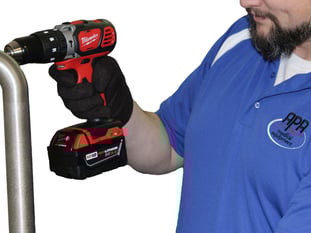 A grab bar is only as good as what it's anchored to. The most common DIY installation failure is mounting into drywall without hitting a stud — the bar feels solid initially but will pull away from the wall under load, which is exactly when someone needs it most.
Professional installation ensures the bar is anchored correctly regardless of surface. APA Medical installs on fiberglass, sheetrock, wood, cement, and tile — surfaces where DIY attempts most often go wrong.
APA is one of the largest installers of grab bars in the Twin Cities, with nearly 1,000 bars installed annually. We are the preferred installer for Medica, UCare, Health Partners, Blue Cross MSHO programs, and county waiver programs. If your insurance or waiver program covers installation, we handle the billing. For out-of-pocket installations, bars are $149 each, including installation, with a one-time $45 additional charge for fiberglass or cement surfaces.
A Note for Family Members and Caregivers
If you're researching grab bars for a parent or someone you care for, you're already ahead of most people. The majority of bathroom falls happen before any safety measures are in place — not because people weren't concerned, but because the conversation about making changes often gets delayed.
Grab bars don't have to look institutional. APA carries bars in multiple finishes and styles that blend with standard bathroom fixtures. For many people, the bigger shift is simply accepting that a grab bar is a practical tool — the same way a handrail on stairs is — not a symbol of decline.
If you're not sure where to start, our full bathroom safety equipment guide covers the broader picture — grab bars, shower chairs, toilet risers, and more — and can help you prioritize what matters most for your specific situation.
Frequently Asked Questions
How do I install a grab bar without a stud?
The safest option is to use a toggle bolt rated for the weight load — but this requires the wall material to be thick enough to hold. In tile, a specialized tile anchor is needed. For most residential applications, we strongly recommend professional installation. Improperly anchored bars create a false sense of security that can be more dangerous than no bar at all.
Are suction cup grab bars safe?
For light balance assistance on flat, non-porous surfaces, yes. For fall prevention or weight-bearing support, no. If the person using the bar is at real fall risk, a permanently installed bar is the right choice.
What size grab bar do I need?
It depends on the location. A 12-inch bar works for narrow vertical placement near a toilet. A 24–36 inch bar is more appropriate for shower and tub walls where a longer reach is needed. APA Medical can advise on the right size for each location during a home assessment.
Does insurance cover grab bar installation?
Many insurance plans — including Medicare Advantage, Medicaid waiver programs, and MSHO plans — cover grab bar installation when ordered by a physician or care coordinator. APA Medical verifies coverage before any work begins. Call us at 612-722-9000 to check your benefits.
Can grab bars be installed on tile?
Yes, with the right drill bits and anchors. Tile installation requires care to avoid cracking, which is another reason professional installation is worth it. APA installs on tile regularly and has the tools and experience to do it without damage.
Get Grab Bars Installed in the Twin Cities
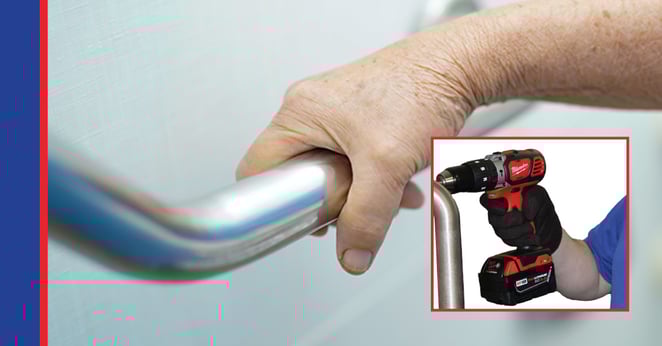
APA Medical supplies and installs bathroom safety bars throughout Minneapolis, St. Paul, and the surrounding Twin Cities metro area. We carry a full range of bar types, finishes, and configurations — and we'll help you figure out what makes sense for your bathroom and your situation.
Call us at 612-722-9000 or contact us online to schedule an assessment.
For the full picture on bathroom safety — beyond grab bars — visit our bathroom safety equipment guide. For placement specifics, see where to install grab bars. For the full range of grab bar and safety pole products, visit our grab bars and safety poles product page.