
Posted on September 22, 2025 by
Most people focus on the surgery itself. The recovery at home is where the real preparation gap shows up.
Hospitals discharge patients quickly. What you come home to — the height of your toilet, the layout of your bathroom, whether you can safely get in and out of a chair — matters more than most people anticipate before the procedure. The right equipment in place before surgery day makes the first few weeks at home significantly safer and more manageable.
This guide covers what's commonly needed after the most frequent orthopedic and general surgeries, what insurance typically covers, and how to get equipment delivered before you come home.
Why Preparing Before Surgery Matters
Ordering and setting up equipment after you're already home from surgery is harder than it sounds. Mobility is limited, energy is low, and making phone calls and waiting for deliveries while managing pain and recovery is genuinely difficult.
The better approach is to assess your home, identify what you'll need, and have everything in place before the day of your procedure. APA Medical can work with you and your care team in advance to make sure the right equipment is ready when you get home.
Call 612-722-9000 or contact us online to start the process before your surgery date.
Equipment by Surgery Type
Every recovery is different, and your doctor's instructions take priority over any general guide. That said, certain equipment needs come up consistently for specific types of procedures.
Hip Replacement Recovery
Hip replacement recovery involves strict movement precautions — particularly avoiding bending the hip past 90 degrees in the early weeks. Standard furniture creates problems immediately.
Commonly needed equipment:
- Lift chair: Getting up from a low seat puts the hip into the exact position most surgeons want to avoid. A power lift chair removes that risk by raising the user to near-standing before weight-bearing begins. This is one of the most frequently recommended pieces of equipment for hip replacement recovery.
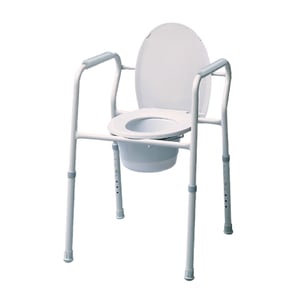
- Raised toilet seat: Standard toilets sit at 15–17 inches, which puts the hip past 90 degrees for most people. A raised toilet seat adds 2–6 inches of height, keeping the hip in a safe range. Models with attached handles on both sides provide additional support for the sit-to-stand movement.
- Grab bars: Supporting hip recovery means reducing every unnecessary physical demand. Grab bars near the toilet and in the shower reduce the effort and risk of transfers significantly.
- Long-handled reacher and dressing aids: Hip precautions prevent bending to pick things up or put on socks and shoes. Long-handled reachers, sock aids, and shoehorns let patients manage these tasks independently.
- Shower chair or transfer bench: Showering requires standing on one leg or transferring carefully — a shower chair eliminates both risks.
- Walker or crutches: Prescribed by your surgeon based on weight-bearing status post-surgery.
Knee Replacement Recovery
Knee replacement recovery focuses on managing swelling, maintaining extension (keeping the leg straight), and safely navigating movement during the first 4–6 weeks.
Commonly needed equipment:
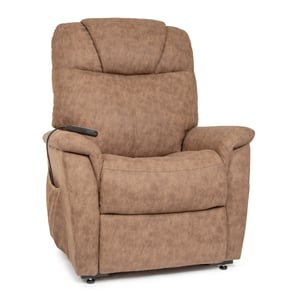
- Lift chair: As with hip replacement, getting up from a low seated position is the highest-risk daily movement. A lift chair is frequently recommended.
- Raised toilet seat with handles: Reduces the depth of the sit-to-stand movement, which is the most demanding transition for a post-surgical knee.
- Ice therapy or cold therapy unit: Swelling management is central to knee recovery. A cold therapy unit circulates cold water continuously and is more effective for extended use than a standard ice pack.
- Leg lifter: Helps the patient move the surgical leg in and out of bed or onto a chair without assistance, reducing strain on the knee.
- Grab bars: For bathroom safety throughout recovery.
- Walker: Standard for the early weeks of knee replacement recovery.
Back Surgery Recovery
Back surgery recovery — whether for spinal fusion, discectomy, or other procedures — involves avoiding bending, lifting, and twisting, and managing pain while maintaining enough mobility to prevent deconditioning.
Commonly needed equipment:
- Lift chair: Particularly useful for lumbar procedures, where getting up from a low seat requires the exact spinal flexion surgeons want to minimize. Infinite-position models that allow precise back angle adjustment are especially helpful.
- Raised toilet seat: Reduces the lumbar flexion required to lower and raise from the toilet.
- Grabber/reacher: Picking anything up from the floor is typically restricted after back surgery for weeks to months.
- Bedside commode: For patients whose bedroom is not near a bathroom — reduces nighttime walking distances and the associated fall risk.
- Back support pillow: Provides lumbar support in chairs and the car for post-surgical positioning comfort.
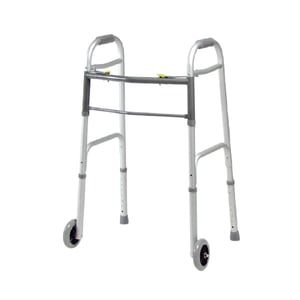
- Walker: Used in the early recovery period for stability and fall prevention.
General Post-Surgery Needs (All Procedures)
Regardless of surgery type, several categories of equipment apply broadly:
Mobility aids: Walkers, crutches, and canes are often prescribed. APA Medical carries a full range and can fit them correctly before your procedure.
Bedside commode: Useful for any patient whose bedroom is not adjacent to a bathroom, or for whom nighttime bathroom trips present a fall risk in the first weeks of recovery.

Incontinence supplies: Temporary incontinence is not uncommon following surgery — particularly after abdominal, prostate, or gynecological procedures. Having supplies on hand avoids an uncomfortable situation during the first days home. APA carries a full range of incontinence products including pads, pull-ups, briefs, and chucks.
Compression stockings: Frequently prescribed after surgery to prevent deep vein thrombosis (DVT). APA carries medical-grade compression stockings in multiple compression levels and sizes.
Therapeutic supplies: Heating pads, back pillows, and hand exercisers or therapy balls support comfort and early rehabilitation as directed by your care team.
What Does Insurance Cover After Surgery?
Post-surgical DME coverage varies by procedure, insurer, and medical necessity determination. Generally speaking:
Medicare Part B covers durable medical equipment — including walkers, crutches, commodes, and hospital beds — when ordered by a physician and supplied by a Medicare-enrolled DME provider. APA Medical is a Medicare-enrolled supplier.
Raised toilet seats and grab bars have a more limited coverage path through standard Medicare, but may be covered through Medicare Advantage plans or Minnesota Medicaid waiver programs depending on the diagnosis and documentation.
Lift chair mechanisms may be covered under Medicare Part B when prescribed as medically necessary for a specific diagnosed condition.
Incontinence supplies may be covered through Medicaid waiver programs when part of a documented care plan.
The clearest path to coverage is to work with APA Medical before your surgery date. We verify your benefits, confirm what documentation is needed, and coordinate with your care team so nothing is delayed after discharge.
Call 612-722-9000 or contact us online to start the coverage verification process.
Frequently Asked Questions
What equipment do I need after hip replacement surgery? Most commonly: a lift chair, raised toilet seat with handles, grab bars, shower chair or transfer bench, long-handled reacher, and a walker or crutches as prescribed. Your surgeon will provide specific movement precautions that determine which products are most critical.
Does insurance cover equipment after surgery? Medicare Part B covers prescribed DME — walkers, crutches, commodes, and similar equipment — when ordered by a physician through a Medicare-enrolled supplier. Coverage for other items varies by plan and diagnosis. APA verifies your benefits before any purchase is made.
What is a raised toilet seat and do I need one after surgery? A raised toilet seat adds height to the toilet — typically 2–6 inches — reducing how far you need to lower yourself and how much effort is needed to stand. After hip or knee replacement, this keeps the joint in a safe range during one of the day's most demanding movements. Most surgeons recommend one for the first 6–12 weeks post-surgery.
Can APA deliver post-surgery equipment before I get home? Yes. We coordinate delivery and setup before your surgery date so everything is in place when you return home. Call 612-722-9000 to discuss timing.
How long will I need post-surgery equipment? It depends on the procedure and your recovery. Some equipment — like a temporary raised toilet seat or walker — may only be needed for a few weeks. Others, like grab bars or a lift chair, are often kept permanently once patients experience how much easier daily life is with them in place.
Get Your Home Ready Before Surgery
APA Medical helps patients and families prepare for home recovery throughout the Twin Cities. We verify insurance coverage, coordinate delivery and installation before your surgery date, and carry everything covered in this guide.
Call 612-722-9000 or contact us online to get started.
For bathroom safety equipment specifically, see our bathroom safety equipment guide. For lift chair options and coverage, see our lift chair benefits guide and lift chair product page. For wheelchair ramp options if you'll be using a mobility device at home, see our modular wheelchair ramps guide.