
Posted on September 22, 2025 by
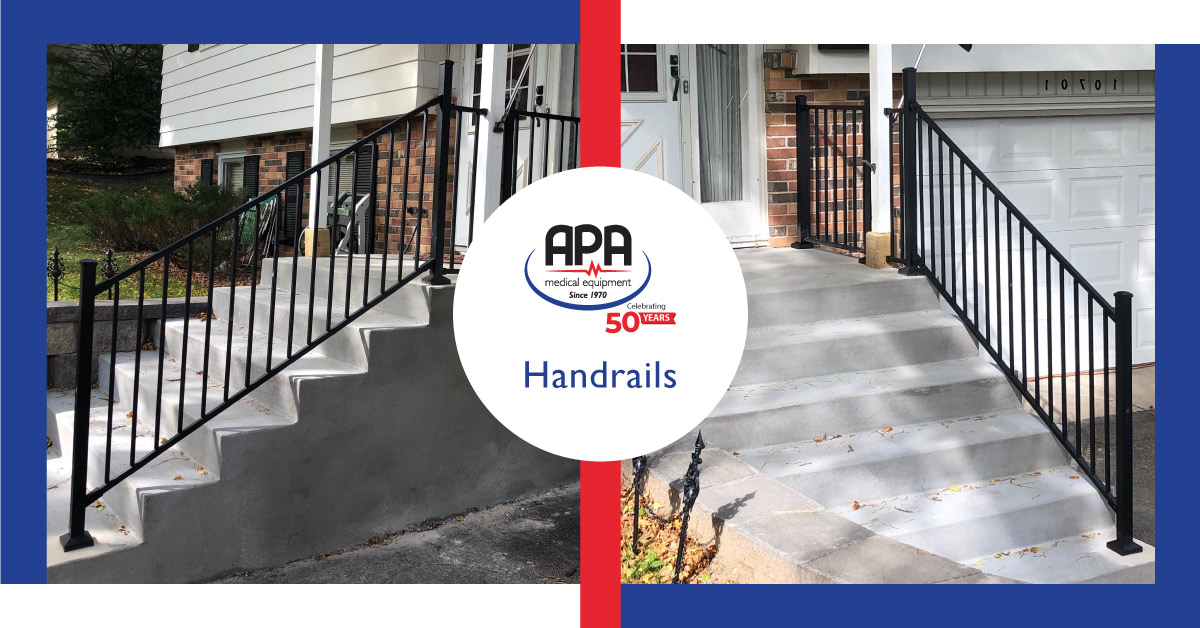
Most homes have handrails on interior staircases. Far fewer have them on exterior front steps — which is often the more dangerous location. A slick concrete step after rain, snow, or ice is one of the most common causes of serious falls for older adults. In Minnesota, that risk exists for a significant portion of the year.
Falls are the most common risk for people with mobility challenges. According to Disabled World, approximately two-thirds of all mobility-related accidents involve falls. A handrail at every step transition in and around the home is one of the most direct ways to reduce that risk.
Adding a handrail to exterior steps is one of the most straightforward home safety improvements available. It doesn't require major construction, it doesn't change the look of your home significantly, and for most people with any mobility concern at all, the difference in confidence and safety is immediate.
This guide covers where handrails matter most, what the code requirements are, and how APA Medical can install one for you.
Where Handrails Make the Most Difference
Exterior Front and Back Steps
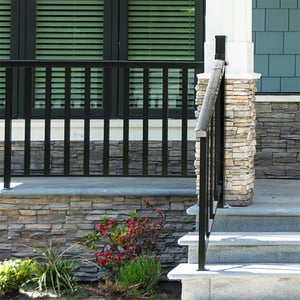 The transition from inside the home to outside is one of the highest-risk points for anyone with balance or strength limitations. Exterior steps are exposed to weather — rain makes them slick, snow and ice make them treacherous, and morning frost on concrete or wood is easy to miss.
A single handrail on one side of exterior steps gives a user a fixed support point for every entry and exit from the home. For people who already find stairs difficult, the handrail is often what makes independent entry and exit possible at all.
Garage Entry Steps
Garage entries are frequently overlooked. Many homes have one or two steps between the garage floor and the interior — no railing, often poor lighting, and a surface that may be uneven or slick. For someone returning home carrying groceries or managing a mobility aid, this is a genuine fall risk point.
Interior Stairways
Residential building codes in Minnesota require a handrail on any stairway with four or more risers. Most homes have these in place, but they may be loose, too low, or positioned in a way that doesn't provide reliable support. If an interior handrail feels unstable when you grab it firmly, it needs attention before it's needed in an emergency.
Hallways and Long Approaches
For people with significant mobility challenges, long hallways — particularly between a bedroom and bathroom — can be tiring and unsteady. A wall-mounted handrail along one side of a hallway provides continuous support across the full distance. This is less common in standard homes but genuinely useful for people aging in place.
Interior vs. Exterior Handrails: What's Different
The installation approach and material selection differ between interior and exterior applications.
Interior handrails are typically wall-mounted and installed into studs. Material options are broader — wood, aluminum, and steel all work well in a controlled indoor environment. The main considerations are height, graspability, and whether the mounting is secure enough to bear full body weight.
Exterior handrails need to withstand Minnesota weather. Aluminum and steel are the preferred materials for exterior applications — they resist rust, hold up through freeze-thaw cycles, and require minimal maintenance. APA Medical installs exterior hand railings in aluminum and steel, configured to fit the specific rise and run of your steps.
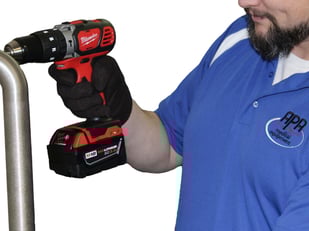
Exterior installations also often involve mounting into concrete, brick, or masonry rather than wood framing — which requires different hardware and drilling techniques than a standard interior installation.
ADA and Residential Code Requirements
While the ADA applies primarily to public and commercial buildings, its guidelines are the standard reference point for safe residential handrail installation. Key requirements that APA follows for all installations:
- Height: 34 to 38 inches above the stair tread or walking surface
- Gripping surface: Continuous and smooth — no obstructions that interrupt the grip along the full length of the rail
- Diameter: Round rails should be between 1.25 and 2 inches in diameter for a secure power grip
- Clearance: At least 1.5 inches between the rail and the wall or mounting surface
- Load capacity: Brackets should support a minimum of 200 lbs. of force in any direction
One note on grip: a rail that's too large in diameter forces a pinch grip rather than a power grip, which provides significantly less support — about 25% of maximum grip strength versus a full-hand grip. Getting the diameter right matters for anyone relying on the rail for real support.
How APA Medical's Handrail Installation Works
APA Medical has been installing handrails and safety railings in Twin Cities homes for over 20 years. We install interior and exterior handrails as part of the same home safety service that includes grab bars, ramps, and other accessibility modifications.
What to expect:
- APA assesses your steps or stairway — rise height, surface material, available mounting points
- We recommend the right configuration and hardware for your specific situation
- We install the handrail, test it for stability, and confirm it meets safety standards before we leave
Pricing: Exterior hand railings are $890 for up to 6 feet, including materials and installation. Call 612-722-9000 for a quote on longer runs or interior installations.
APA installs on concrete, brick, wood, and masonry — the surfaces that exterior steps are most commonly made from. We also handle interior wall-mounted installations for hallways and stairways.
Is a Handrail the Same as a Grab Bar?
Not exactly, though the terms are sometimes used interchangeably. The distinction worth knowing:
Grab bars are typically shorter (12–42 inches), installed horizontally or at a fixed angle, and designed for specific transfer points — beside a toilet, in a shower, at a tub entry. They're anchored into walls and designed to support full body weight at a fixed location.
Handrails run along the full length of a stairway or walkway, following the slope of the stairs. They're designed for continuous gripping during movement rather than stationary support.
For home safety planning, most people benefit from both — grab bars for bathroom transfers and handrails for stair navigation. APA installs both as part of a full home safety assessment.
For grab bar information, see our bathroom safety bars guide and grab bar placement guide.
Frequently Asked Questions
Do I need a handrail on my steps? Minnesota residential building code requires a handrail on any stairway with four or more risers. For exterior steps with fewer risers, it's not legally required — but for anyone with mobility concerns, it's one of the most practical safety additions you can make.
What is the correct height for a handrail? 34 to 38 inches above the stair tread or walking surface, measured vertically. This range accommodates most adults and meets both ADA and residential code guidelines.
Can APA install exterior handrails? Yes. APA installs exterior hand railings throughout the Twin Cities. We work with concrete, brick, masonry, and wood surfaces. Exterior railings are $890 for up to 6 feet including materials and installation. Call 612-722-9000 for a quote.
Is a handrail covered by insurance or a waiver program? Exterior handrails are sometimes covered through Minnesota Medicaid waiver programs as a home environmental adaptation, depending on the diagnosis and documentation. APA can check your coverage before any work begins.
How long does handrail installation take? A standard exterior or interior handrail installation typically takes a few hours. APA handles all measurements, hardware, and installation in a single visit.
Get a Handrail Installed in the Twin Cities
APA Medical installs handrails throughout Minneapolis, St. Paul, and the surrounding Twin Cities metro. We assess your specific steps or stairway, recommend the right configuration, and complete the installation in a single visit.
Call 612-722-9000 or contact us online to schedule.
For the full range of home safety installation services, visit our installation services page. For wheelchair ramp installation, see our modular wheelchair ramps guide. For bathroom grab bars, see our bathroom safety bars guide.