
Posted on September 8, 2025 by
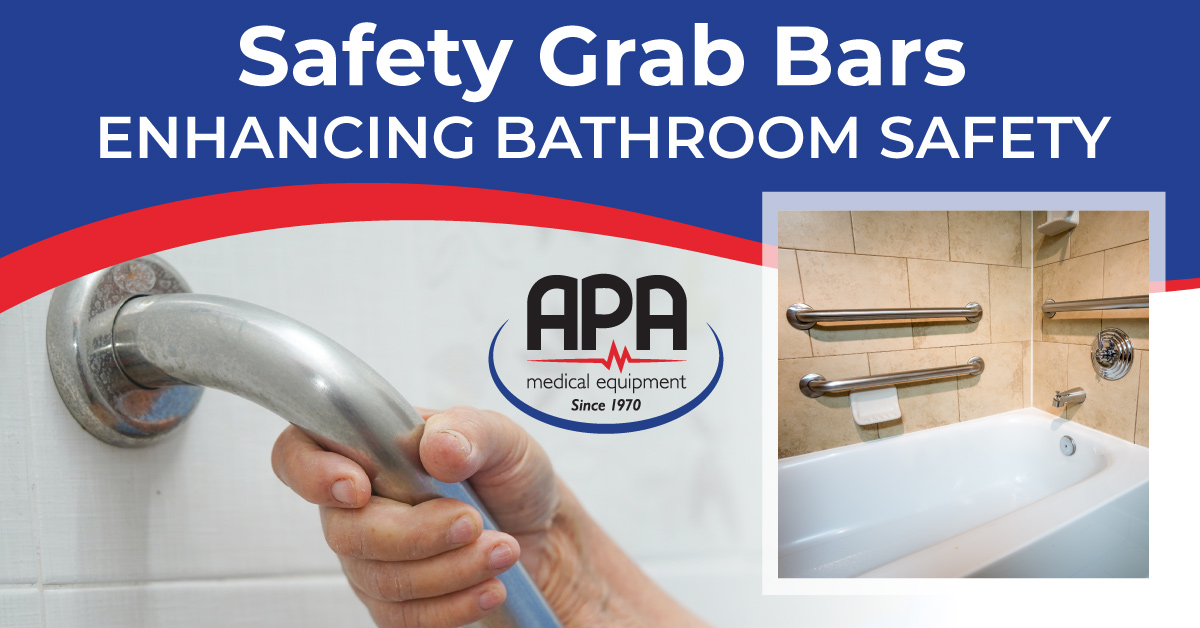
A grab bar in the wrong place offers little protection. Being in the right place can prevent a serious fall. The difference comes down to placement — knowing exactly where to mount a bar based on how the body moves in each situation.
This guide covers ADA-recommended placement for every common location in the home, along with practical guidance for situations where the standard measurements need to be adjusted.
Not sure which type of bar is right for each location? See our bathroom safety bars guide for a breakdown of straight bars, angled bars, suction cup options, and floor-to-ceiling poles.
General Placement Principles
Before getting into specifics, three rules apply across every location:
Mount into studs. A grab bar is only as strong as what it's anchored to. Drywall alone will not hold under load. Bars must be mounted into wall studs or with appropriately rated anchors for the wall material. APA installs on fiberglass, sheetrock, wood, cement, and tile.
Match height to the user. ADA measurements are averages based on a standard adult. Taller or shorter users, or those with specific mobility limitations, may need bars positioned higher or lower. When in doubt, have the person stand or sit in position and reach naturally — that's where the bar should be.
More is not wrong. Most people under-install. A bathroom with bars near the toilet, tub entry, tub wall, and shower provides meaningful coverage. Adding one bar near the sink or along a long entry wall costs little and removes a gap in support.
Shower Grab Bar Placement
Walk-in showers
A minimum of two bars is recommended for a standard shower stall. Three or four is not unusual depending on the size and the user's needs.
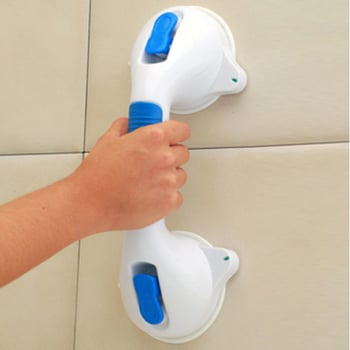
- Entrance bar: Install a short vertical bar (12–18 inches) at the entry point to the shower, positioned for easy gripping when stepping in and out
- Side wall bar: Install a horizontal bar 33–36 inches from the floor on the side wall — this is the primary support bar for balance while standing and bathing
- Back wall bar: For larger showers or users with significant balance challenges, a horizontal bar on the back wall at the same height adds a second anchor point
- Shower seat bar: If a shower seat is present, add a bar on the adjacent wall within easy reach of a seated user
Tub/shower combinations
The ADA recommends two bars on the back wall of a tub/shower combination:
- One bar 8–10 inches from the rim of the tub
- A second bar parallel to it, 33–36 inches from the base of the tub
An additional bar on the control wall — near the faucet — helps users maintain balance while adjusting water temperature.
Bathtub Grab Bar Placement
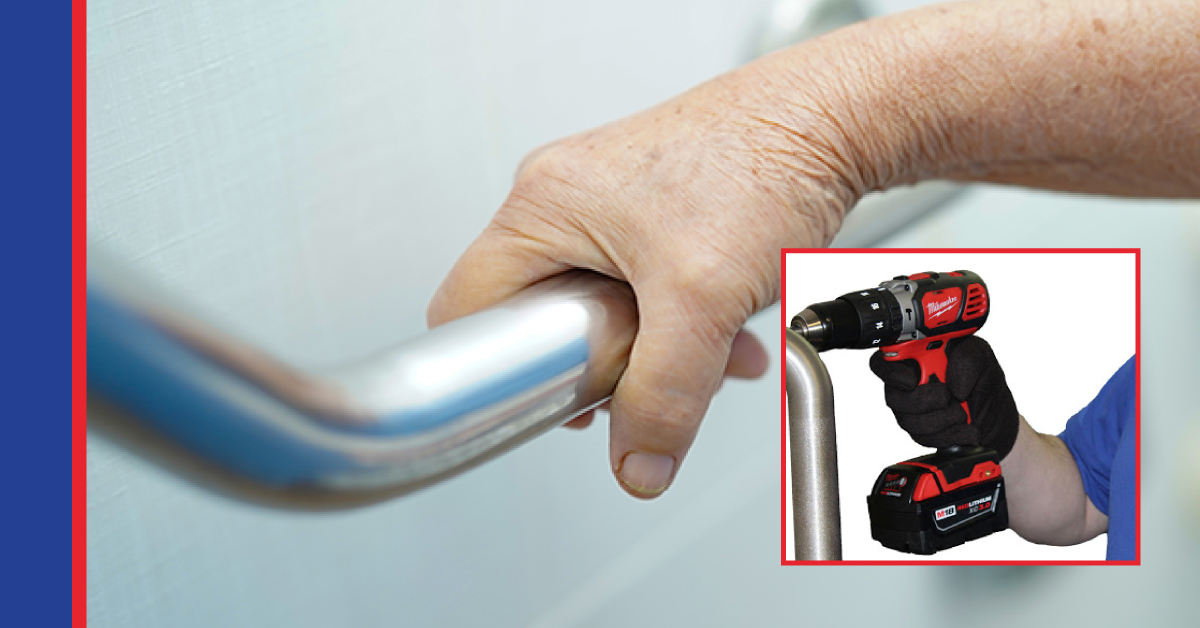 Getting in and out of a bathtub is one of the highest-risk movements in the home. The step-over height and wet surfaces make it a common point of falls.
- Tub entry bar: A vertical or angled bar mounted on the wall at the end of the tub where the user steps in provides a secure handhold during entry and exit. Position it 33–36 inches from the floor.
- Long wall bar: A horizontal bar along the side wall of the tub, 8–10 inches above the rim, supports balance while lowering into and rising from the tub
- Faucet end bar: A shorter bar near the controls helps users steady themselves while bathing
For users who cannot safely get in and out of a standard tub, a tub transfer bench paired with a grab bar is often a better solution than bars alone. APA carries transfer benches and bathing aids that work alongside grab bars for more complex transfers.
Toilet Grab Bar Placement
Toilet falls are more common than most people expect, particularly among older adults and those recovering from surgery. Getting up from a seated position requires leg strength and balance that may be compromised.
- Side wall bar: Mount a horizontal bar on the side wall 33–36 inches from the floor and 6 inches in front of the toilet bowl. This is the primary support bar for pushing up from a seated position.
- Rear wall bar: For users who need bilateral support, a second bar on the opposite side — using a floor-to-ceiling pole or toilet safety frame — provides support on both sides
For situations where wall installation is not possible, APA carries a toilet safety frame that clamps directly to the toilet without drilling. It provides armrests on both sides and adjusts in width to fit most standard toilets.
Hallway and Entry Grab Bar Placement
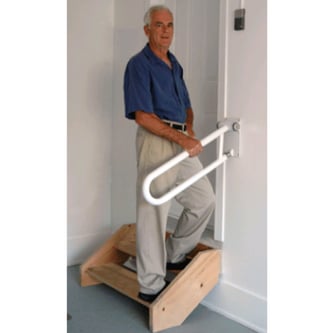 Long hallways and bathroom entries are often overlooked but represent real fall risk, particularly at night or for users who fatigue over distance.
- Hallway bars: Mount horizontal bars 33–36 inches from the floor along one side of the hallway, spaced so a user can maintain continuous contact between support points
- Bathroom entry: If there is a long approach between the bathroom door and the toilet or shower, a bar along the wall provides support for the full transit
For stairs and exterior entry steps, APA installs handrails as part of the same service. See our installation services page for what's included.
What to Do When There's No Stud Where You Need a Bar
Studs are typically spaced 16 inches apart. The ideal bar placement won't always line up with one. Options when there's no stud available:
Toggle bolts: Rated toggle bolts can support significant weight in drywall when installed correctly, but require careful selection based on the wall thickness and the expected load. This is not a DIY shortcut — an improperly rated or installed anchor will fail under load.
Backing board: The most reliable solution for long-term installation is adding a backing board behind the wall surface — a solid piece of blocking mounted between studs that gives the bar a full-width anchor surface. This requires opening the wall, which is why it's more common in renovation projects.
Tile: Tile installation requires a specialized drill bit and anchor to avoid cracking. It's manageable with the right tools but a common point of DIY failure.
APA's recommendation: For any installation where stud alignment is uncertain, professional installation is worth the investment. A bar that pulls away from the wall under load is worse than no bar at all. APA installs on all surface types and assesses each location before committing to a placement.
How Many Grab Bars Does a Bathroom Need?
There's no single answer, but a well-equipped bathroom typically includes:
- 1–2 bars near the toilet
- 2–3 bars in the shower or tub area
- 1 bar at the tub entry point
That's a minimum of 4–6 bars for a fully covered bathroom. Most homes start with 1–2 and add more over time as needs change. APA can assess your bathroom and recommend a placement plan based on the specific layout and the user's mobility.
Frequently Asked Questions
Where should grab bars be placed in a shower? At minimum: a vertical bar at the entry and a horizontal bar on the side wall at 33–36 inches from the floor. For users with more significant balance challenges, add a back wall bar and a bar near the shower seat if one is present.
How high should a grab bar be next to a toilet? 33–36 inches from the floor, positioned 6 inches in front of the toilet bowl on the side wall. Adjust based on the user's height and how they naturally reach when pushing up from seated.
Can grab bars be installed in tile? Yes. It requires a tile drill bit and the right anchors to avoid cracking the tile. APA installs on tile regularly. We add a one-time charge of $45 for fiberglass or cement installations.
How many grab bars does a bathroom need? A fully covered bathroom typically has 4–6 bars: 1–2 near the toilet and 2–3 in the shower or tub area plus an entry bar. Most people start with fewer and add more as needed.
Is grab bar installation covered by insurance? Many plans cover it — including Medicare Advantage, Medicaid waiver programs, and MSHO plans — when ordered by a physician or care coordinator. APA verifies coverage before any work begins.
Get Grab Bars Installed in the Twin Cities
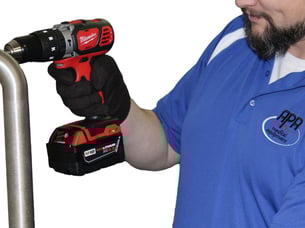 APA Medical installs nearly 1,000 grab bars annually across Minneapolis, St. Paul, and the surrounding Twin Cities metro. We assess placement, install on all surface types, and work with most insurance and waiver programs.
Bars are $149 each including installation. A one-time $45 charge applies for fiberglass or cement surfaces.
Call 612-722-9000 or contact us online to schedule an assessment.
For a full overview of grab bar types and how to choose between them, see our bathroom safety bars guide. For the full range of bathroom safety products, visit our bathroom safety equipment page. To browse grab bars and safety poles, visit our product page.